
Case Studies
New Sports Brand Private Label Launch
Rather than treating private label as a simple customization request, the project was approached as a structured product launch process—from product selection and specification definition to sampling, packaging confirmation, production, and quality control. For confidentiality, the customer and commercially sensitive project details are not disclosed. The case focuses on the decision-making process, manufacturing considerations, and practical lessons that can be applied to similar new sports brand launches.
The Challenge: Building a Product Line Without Overcomplicating the First Launch
A new sports brand often faces a different challenge from an established company. An established brand may already understand its customers, price points, sales channels, product performance expectations, and repeat-purchase behavior. A new brand has less historical data and therefore needs to make its initial product decisions more carefully. The project began with a simple objective: create a recognizable sports product line that could be introduced under the customer's own brand while keeping the initial product architecture manageable.
The main challenges included:
- Selecting products suitable for the brand's target users
- Establishing consistent specifications across the product range
- Developing private label packaging
- Maintaining a clear brand identity across multiple SKUs
- Controlling unnecessary customization costs
- Confirming samples before production
- Establishing quality requirements before mass manufacturing
- Creating a product platform that could support future expansion
It should start with:
Project Approach: Start With the Brand, Not Just the Product
For a new sports brand, product selection should reflect the intended customer and application. Instead of immediately expanding into a large catalog, the project was structured around a focused launch portfolio. The initial range was evaluated according to product relevance, manufacturing feasibility, packaging requirements, application scenarios, and potential for future product extensions.
This approach helped separate three different decisions:
Brand decision: What should the new sports brand be known for?
Product decision: Which products best support that positioning?
Manufacturing decision: How can those products be produced consistently at the required specifications?
This distinction is important because a factory may be capable of producing many products, but that does not mean every available product belongs in a new brand's first launch.
Onlywell's role was therefore not limited to supplying finished goods. The manufacturing team contributed practical input on product specifications, materials, dimensions, packaging formats, production feasibility, and quality considerations.
Product Selection: Creating a Focused First Range
The first product range was designed around products that could serve clear sports and support applications. Potential categories included cohesive bandages, kinesiology tape, rigid sports tape, elastic adhesive bandages, foam underwrap, and related sports recovery products.
The selection process considered several practical questions:
Does the product have a clear application?
A product should solve a recognizable user need rather than exist simply to increase SKU count.
Can the product demonstrate the brand's positioning?
If a brand wants to position itself around professional sports support, product specifications and presentation need to reinforce that message.
Can the product be differentiated?
Differentiation may come from material selection, dimensions, adhesive characteristics, colors, packaging, labeling, or a combination of these elements.
Can the product be manufactured consistently?
A specification that looks attractive on paper is not useful if it creates unnecessary production complexity or quality instability.
Can the product range scale later?
The initial products should create a foundation for future extensions instead of becoming isolated SKUs.
This framework allowed the project to remain commercially focused while leaving room for future product development.
Defining Specifications Before Customization
One of the most important stages in a private label sports brand launch is specification confirmation. Logo customization and packaging design are visible, but product specifications determine what the customer actually receives.
Depending on the product, specifications may include:
- Material composition
- Fabric structure
- Width and length
- Elasticity
- Adhesive characteristics
- Breathability
- Cohesion
- Color
- Core and roll configuration
- Individual packaging
- Carton packaging
- Labeling requirements
- Applicable testing and compliance documentation
For sports tape and cohesive bandage products, small specification differences can affect application feel, stretch behavior, adhesion, tearability, and overall user experience. For this reason, the project treated product specifications as part of the brand development process rather than as a final purchasing detail. This also creates an important advantage for a new brand: once the specifications are documented and approved, future production can be measured against a defined product standard.
Private Label Branding: Turning a Product Into a Brand Asset
A private label product should look like part of a brand—not simply a generic factory product carrying a logo. The packaging development therefore focused on maintaining consistency across the initial product range.
Key elements included:
- Brand logo placement
- Product naming
- Product color system
- Functional descriptions
- Size and specification information
- Application guidance
- Packaging hierarchy
- Barcode and labeling requirements
- Carton identification
- Consistent visual language
For a new sports brand, packaging also serves an important commercial function. The product may appear on an e-commerce page, in a distributor catalog, inside a gym or sports store, or directly in the hands of an athlete. Consistent packaging helps create recognition across these touchpoints. The objective was not simply to make the packaging attractive. It was to make the product range look intentional, coherent, and commercially ready.
Sampling: Validate Before Moving to Production
Sampling is one of the most important control points in a new sports brand launch. Before mass production, samples allow the brand team to evaluate whether the physical product matches the intended specification.
The review process can cover:
- Product appearance
- Material feel
- Size and dimensions
- Adhesion or cohesion
- Stretch and handling characteristics
- Packaging appearance
- Label accuracy
- Color consistency
- Application experience
This stage is particularly important for first-time private label customers because the approved sample becomes a practical reference for production. Onlywell's manufacturing experience helps connect customer expectations with production reality. If a requested specification needs adjustment for manufacturing stability, the issue can be identified before mass production rather than after goods have been completed.
Quality Control: Protecting Consistency Across the Launch
For a new brand, the first production run carries greater importance than a normal replenishment order. The first batch establishes the customer's expectation of what the brand's products should be. Onlywell's manufacturing and quality-control process is therefore structured around documented specifications and production checks rather than relying solely on final visual inspection.
Manufacturing Experience That Supports a New Brand Launch
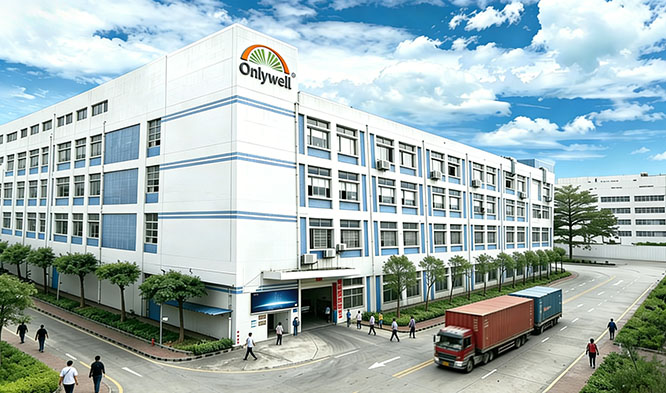
A new sports brand does not necessarily need the largest possible product catalog. It needs a manufacturing partner capable of turning a defined product concept into a repeatable product. Onlywell's manufacturing operation includes more than 380 employees, dedicated R&D personnel, quality inspection personnel, and large-scale coating and converting capabilities.
Launch Preparation: Building a Repeatable Product System
The project was not treated as a one-time customized order. The objective was to establish a repeatable system that could support the brand beyond its first shipment. This included maintaining clear product specifications, approved samples, packaging references, and production requirements. Once these elements are established, future orders can be handled against an existing reference rather than rebuilding the product from the beginning.
What This Private Label Launch Demonstrates
This project highlights several practical lessons for entrepreneurs planning a new sports brand.
1. A smaller product range can be strategically stronger
Launching too many SKUs can increase inventory pressure, packaging complexity, and decision-making costs. A focused initial range can make it easier to communicate the brand proposition and learn from early market feedback.
2. Product specifications should be defined before mass production
A logo can be changed relatively easily. A product specification should be treated much more carefully. Clear specifications create a reference for sampling, quality inspection, production, and future replenishment.
3. Packaging is part of the product experience
Private label branding is not limited to putting a logo on the product. Packaging, labeling, colors, product naming, and presentation should work together to create a consistent brand identity.
4. Sampling is a commercial control point
A sample gives the brand an opportunity to identify issues before production volume increases. It is therefore not simply a preliminary step. It is part of quality and risk management.
5. Manufacturing capability matters most when the brand begins to scale
A supplier may be able to produce one successful sample. A stronger manufacturing partner should also be able to reproduce the approved specification consistently across commercial orders.
Why Onlywell for New Sports Brand Private Label Projects?
Onlywell combines product development experience with established sports medical manufacturing capabilities. The company supports customers across product selection, specification development, sampling, private label packaging, production, quality control, and international supply. This integrated approach is particularly useful for new sports brands because the early stage often involves decisions that cross multiple departments.
Product development affects manufacturing.
Packaging affects production.
Specifications affect quality control.
And the initial product range affects future brand expansion.
By connecting these elements within one manufacturing workflow, Onlywell helps customers move from a product idea toward a more structured commercial launch.
The goal is not simply to produce a private label sports product.
The goal is to help create a product system that a new sports brand can build on.
Key Takeaways for Entrepreneurs Planning a Sports Brand Launch
If you are preparing to launch a new sports brand, the most important questions are not only about price or MOQ.
Before production begins, consider:
- Which products define the brand?
- Who is the target customer?
- What applications should the products address?
- Which specifications are essential?
- What level of customization is commercially justified?
- How should the product range look as a unified brand?
- What should the approved sample become the reference for?
- Which quality requirements need to be documented?
- How can the initial product range support future expansion?
Answering these questions early can reduce unnecessary revisions and create a clearer path from concept to production. For a new sports brand, the first launch is more than the first order. It is the foundation of the product system that the brand may continue building for years.
Start Your Sports Brand Private Label Project With Onlywell
Whether you are launching your first sports product, building a new private label range, or preparing to expand an existing sports brand, Onlywell can support the process from product selection and specification development through sampling, packaging, manufacturing, and quality control. Share your target market, product ideas, preferred specifications, packaging requirements, and expected launch plan with our team.
Get Free Samples & Request an OEM Quote →