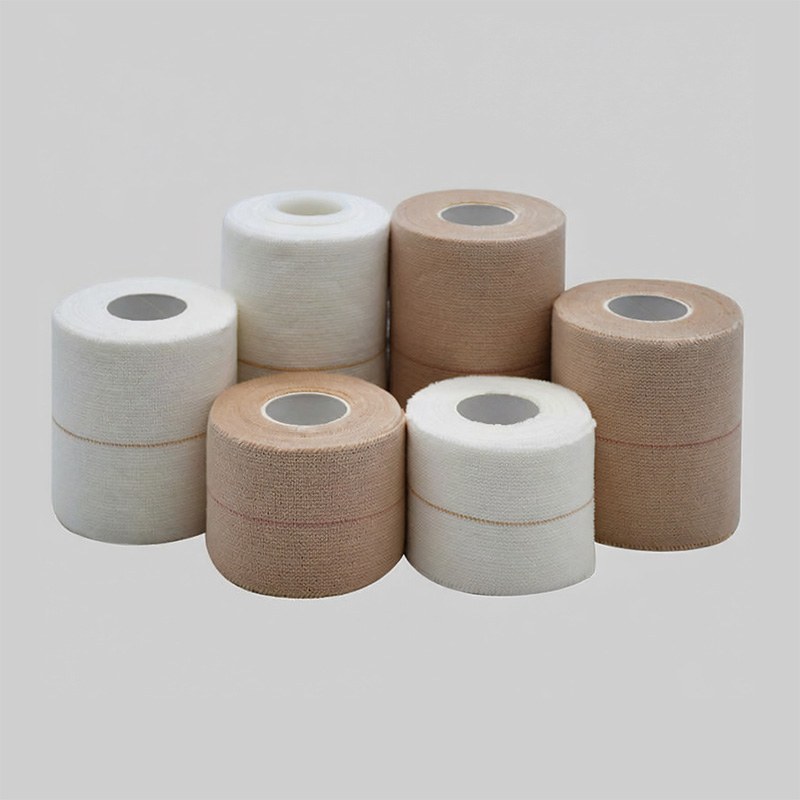


Kinesiology Tape Manufacturer

Kinesiology Tape Manufacturer & Supplier Guide
Choosing a kinesiology tape manufacturer is not simply a matter of comparing prices or selecting products from an online catalog. For distributors, sports brands, physiotherapy suppliers, wholesalers, and private label companies, the manufacturing partner can directly affect product consistency, adhesive performance, customization options, packaging, production capacity, and long-term supply stability.
Understanding the Kinesiology Tape Supply Chain
The kinesiology tape supply chain includes raw material suppliers, adhesive suppliers, coating facilities, converting factories, direct manufacturers, OEM companies, private label suppliers, distributors, wholesalers, and trading companies. These businesses may offer similar products, but their manufacturing capabilities can be very different.
If the requirement is standard stock kinesiology tape, a wholesale supplier may be sufficient. If the buyer needs custom materials, printing, packaging, pre-cut shapes, or a long-term private label product, a manufacturer with direct production and OEM capabilities may be more appropriate.
What Defines a Professional Kinesiology Tape Manufacturer?
A professional manufacturer should be evaluated by manufacturing capability and process control rather than simply by whether it operates a factory.
Important capabilities may include:
- Elastic fabric preparation
- Adhesive coating
- Stretch and recovery control
- Slitting and rewinding
- Printing
- Pre-cut converting
- Packaging
- Finished-product inspection
- Batch production control
- OEM product development
- Private label support
Manufacturing control is particularly important for repeat orders. A sample may meet expectations, but commercial buyers also need the manufacturer to reproduce the agreed specification consistently across subsequent production batches. For this reason, factory capability, quality management, material consistency, production capacity, and communication should all be considered during supplier evaluation.
Kinesiology Tape Product Landscape
Kinesiology tape is available in different materials, constructions, sizes, adhesive configurations, colors, and converting formats. The most appropriate product depends on the intended application, target market, product positioning, and technical requirements.
1. Cotton Kinesiology Tape
Cotton kinesiology tape is widely used in sports, fitness, physiotherapy, rehabilitation, and general body-support applications. Cotton provides a familiar textile structure and can be manufactured with different elasticity and adhesive specifications.
Typical product considerations include:
- Cotton fabric construction
- Elasticity
- Breathability
- Adhesive performance
- Roll dimensions
- Color
- Printing
- Packaging
For brands developing a conventional sports medicine tape range, cotton kinesiology tape can serve as a core product category.
2. Rayon Kinesiology Tape
Rayon kinesiology tape provides an alternative textile construction for buyers looking for a different combination of surface characteristics, flexibility, and product appearance. Rayon products can be considered for sports, rehabilitation, and customized product programs where material selection is part of the product positioning.
3. Nylon Kinesiology Tape
Nylon kinesiology tape is suitable for product programs where flexibility, durability, and active-use performance are important considerations. The final performance of a nylon kinesiology tape depends on the complete construction, including the fabric, adhesive system, coating process, elasticity, and converting specifications.
4. Waterproof Kinesiology Tape
Waterproof or water-resistant kinesiology tape is designed for applications where exposure to moisture is an important consideration. Its performance should not be evaluated by fabric selection alone. Fabric construction, adhesive characteristics, coating, processing, and finished-product design can all influence moisture resistance.
This product category can be considered for:
- Outdoor sports
- Fitness
- High-intensity activities
- Active lifestyles
- Extended-use product programs
5. Pre-Cut Kinesiology Tape
Pre-cut kinesiology tape provides a ready-to-use format and can simplify product positioning for retail, physiotherapy, sports recovery, and consumer applications.
Possible formats include:
- I strips
- Y strips
- X-shaped pieces
- Rounded patches
- Application-specific shapes
- Multi-piece kits
- Custom pre-cut configurations
For private label products, pre-cut designs can also be combined with application-specific packaging and instructions.
6. Printed Kinesiology Tape
Printed kinesiology tape allows brands to differentiate their products through visual identity.
Depending on the manufacturing process, customization may include:
- Brand logos
- Repeating patterns
- Custom colors
- Graphic designs
- Application-specific artwork
Printing should be evaluated together with fabric compatibility, production stability, adhesive requirements, packaging, and order quantity.
7. Jumbo Roll Kinesiology Tape
Jumbo roll kinesiology tape can be suitable for converters, distributors, and businesses that require downstream slitting or rewinding.
For jumbo-roll sourcing, buyers should pay attention to:
- Roll consistency
- Coating uniformity
- Width
- Length
- Tension control
- Batch consistency
- Rewinding performance
Cotton vs Rayon vs Nylon Kinesiology Tape
Material selection should be based on the intended product specification rather than the assumption that one material is universally better.
| Material | General Characteristics | Common Product Considerations |
|---|---|---|
| Cotton | Familiar textile structure and versatile use | Sports, fitness, rehabilitation |
| Rayon | Smooth textile characteristics and flexible feel | Customized and premium-oriented products |
| Nylon | Flexible and durable construction | Active-use and moisture-related applications |
| Hybrid / Blend | Combines selected material characteristics | Customized OEM development |
The fabric is only one part of the finished kinesiology tape. Adhesive formulation, coating consistency, elasticity, recovery, dimensions, processing, and storage can all affect the final product.
Manufacturer, OEM, Supplier or Trading Company?
Before requesting quotations, buyers should determine what type of manufacturing partner they actually need.
1. Direct Kinesiology Tape Manufacturer
A direct manufacturer controls production and can provide greater visibility into materials, manufacturing processes, quality control, and production scheduling.
This model can be useful for buyers requiring:
- Consistent specifications
- Repeat production
- Product customization
- Large-volume supply
- Technical communication
- Long-term manufacturing cooperation
2. OEM Kinesiology Tape Manufacturer
An OEM manufacturer produces products according to customer-defined specifications.
OEM projects may include:
- Fabric selection
- Adhesive requirements
- Elasticity
- Width and length
- Colors
- Printing
- Pre-cut shapes
- Packaging
- Labels
- Product configuration
This model is suitable for brands developing their own kinesiology tape products.
3. Private Label Kinesiology Tape Supplier
Private label manufacturing allows companies to sell kinesiology tape under their own brand.
Private label programs may include:
- Custom logo
- Retail box
- Pouch
- Labels
- Barcode
- Product colors
- Tape printing
- Multi-language packaging
- Custom product specifications
4. Wholesale Kinesiology Tape Supplier
Wholesale sourcing is generally focused on commercial quantities, pricing, packaging, delivery, and repeat supply.
Wholesale buyers should consider:
- MOQ
- Unit cost
- Product consistency
- Production capacity
- Lead time
- Packaging
- Reorder capability
- Export experience
5. Trading or Sourcing Company
Trading companies can provide access to multiple products or factories, but buyers should clarify who is responsible for actual manufacturing, quality control, product specifications, and after-sales support.
How to Choose a Kinesiology Tape Manufacturer
A structured manufacturer evaluation can help buyers make better sourcing decisions.
1. Manufacturing Capability
Ask whether the supplier actually manufactures kinesiology tape and which processes are controlled internally.
Important questions include:
- Where is the production facility located?
- Which manufacturing processes are performed in-house?
- What materials can be produced?
- What product formats are available?
- Can the factory support repeat orders?
- Can it support customized production?
2. Material Capability
A capable manufacturer should be able to explain available materials and how they relate to product requirements.
Evaluate:
- Fabric type
- Fabric construction
- Elasticity
- Recovery
- Width
- Length
- Surface characteristics
- Moisture resistance
3. Adhesive Capability
Adhesive performance is a major part of kinesiology tape manufacturing. Buyers should ask how adhesive coating is controlled and which characteristics are evaluated.
Potential considerations include:
- Adhesion
- Peel performance
- Holding performance
- Coating consistency
- Skin-contact characteristics
- Moisture resistance
- Residue
- Storage stability
4. Elasticity Control
Kinesiology tape requires controlled elasticity rather than simply being highly stretchable.
Manufacturers should control the relationship between:
- Fabric construction
- Stretch ratio
- Elastic recovery
- Adhesive coating
- Processing
- Finished dimensions
For repeat OEM production, maintaining consistent elasticity is particularly important.
5. Quality Management
Quality control should cover the entire manufacturing process.
Relevant areas include:
- Incoming material inspection
- Production monitoring
- Adhesive testing
- Elasticity evaluation
- Appearance inspection
- Packaging verification
- Final inspection
- Batch management
6. Customization Capability
Buyers should determine whether a supplier can customize the actual product or only the packaging.
A full OEM program may involve:
- Materials
- Adhesive
- Elasticity
- Size
- Color
- Printing
- Pre-cutting
- Packaging
- Labels
This distinction is important when developing a differentiated private label product.
7. Production Capacity
Production capacity should be evaluated against expected order volume and future growth. A supplier that can handle an initial order should also be able to explain how repeat orders are planned and maintained.
8. MOQ and Lead Time
MOQ varies according to the product. Standard products normally have different requirements from products involving custom fabric, special colors, printing, packaging, or custom converting. Buyers should request project-specific MOQ and lead-time information before confirming production.
Kinesiology Tape Manufacturer Evaluation Checklist
Use this framework when comparing manufacturers.
| Evaluation Area | What to Verify |
|---|---|
| Factory | Manufacturing location and production ownership |
| Materials | Cotton, rayon, nylon and other available constructions |
| Adhesive | Coating capability and performance control |
| Elasticity | Stretch and recovery consistency |
| Converting | Slitting, rewinding and pre-cut capability |
| Printing | Logo, pattern and color customization |
| Packaging | Retail, bulk and private label options |
| OEM | Product-development and customization support |
| Quality | Inspection and batch-control procedures |
| Capacity | Ability to support expected order volumes |
| MOQ | Standard and customized requirements |
| Lead Time | Sampling and production schedule |
| Documentation | Applicable quality and product documentation |
| Export | International supply experience |
How Kinesiology Tape Is Manufactured
Although production systems vary between factories, a typical kinesiology tape manufacturing process includes several controlled stages.
1. Material Selection and Preparation
The manufacturer selects the appropriate elastic fabric according to the agreed product specification.
Incoming materials can be checked for:
- Fabric consistency
- Elasticity
- Dimensions
- Surface condition
- Adhesive compatibility
Stable raw materials provide the foundation for consistent production.
2. Adhesive Coating
The adhesive is applied to the elastic fabric under controlled production conditions. Coating consistency is important because variations may affect adhesion, skin feel, residue, and overall product performance.
3. Drying and Processing
After coating, the material undergoes controlled processing and drying. Manufacturing parameters need to remain stable across the production roll to reduce variation.
4. Elastic Performance Testing
Relevant characteristics can include:
- Stretch ratio
- Elastic recovery
- Tensile strength
- Fabric flexibility
These checks help maintain consistency between production batches.
5. Slitting and Rewinding
Large rolls are converted into the required widths and lengths. Accurate tension and dimensional control are important for producing consistent finished rolls.
6. Printing and Converting
Depending on the specification, products may undergo:
- Logo printing
- Pattern printing
- Pre-cutting
- Custom shaping
- Labeling
- Other converting processes
7. Packaging
Finished products are packaged according to the commercial specification.
Possible formats include:
- Individual boxes
- Pouches
- Polybags
- Retail packaging
- Bulk cartons
- Private label packaging
8. Final Quality Inspection
Finished products are inspected according to the agreed specifications before shipment. For long-term OEM programs, batch-to-batch consistency is particularly important.
Kinesiology Tape Quality Control
Quality control should begin with raw materials and continue through final shipment. Onlywell's current manufacturing process includes incoming material inspection, adhesive performance testing, elasticity evaluation, product appearance inspection, packaging verification, and final shipment inspection.
1. Raw Material Inspection
Incoming fabrics and other production materials are checked against defined requirements before entering production.
2. Adhesive Control
Adhesive coating consistency and adhesion performance are monitored during production.
3. Elasticity Evaluation
Finished material can be evaluated for stretch, recovery, tensile characteristics, and flexibility.
4. Appearance Inspection
Finished rolls are checked for appearance and manufacturing consistency.
5. Packaging Verification
Packaging is checked against the agreed specification before shipment.
6. Final Inspection
Finished products undergo final inspection before release for shipment. For buyers developing private label products, these controls should be discussed together with the product specification and target market requirements.
Kinesiology Tape Specifications
Onlywell's current kinesiology tape specification range includes cotton, rayon, nylon, and hybrid material options, medical acrylic adhesive, 130%–180% stretch, widths of 2.5cm, 5cm, 7.5cm and 10cm, 5m or customized lengths, standard or customized colors, waterproof options, and standard or customized packaging.
| Parameter | Specification Options |
|---|---|
| Product Type | Kinesiology Tape |
| Material | Cotton / Rayon / Nylon / Hybrid |
| Adhesive | Medical Acrylic Adhesive |
| Elasticity | 130%–180% Stretch |
| Width | 2.5cm / 5cm / 7.5cm / 10cm |
| Length | 5m / Custom Length |
| Color | Standard / Custom |
| Waterproof Option | Available |
| Printing | Available for selected OEM programs |
| Packaging | Standard / Customized |
Final specifications should always be confirmed according to the specific product, market, and OEM requirements.
Kinesiology Tape OEM and Private Label Manufacturing
OEM manufacturing allows sports brands, distributors, healthcare suppliers, and retailers to develop customized kinesiology tape products without establishing their own manufacturing facility.
A typical development process is:
Product concept → Specification → Material selection → Sample → Evaluation → Packaging → Pilot production → Quality confirmation → Mass production
Depending on the project, customization may include:
- Fabric material
- Adhesive characteristics
- Elasticity
- Width
- Length
- Color
- Logo
- Pattern
- Pre-cut shape
- Retail packaging
- Labels
- Barcodes
- Carton configuration
Onlywell's existing OEM program supports product specifications, materials, adhesive options, colors, printing, packaging, and private label development. For new brands, sample development followed by pilot production can help validate the product specification before larger-volume purchasing.
Kinesiology Tape Wholesale and International Supply
Wholesale buyers generally need to balance price, product consistency, production capacity, packaging, lead time, and supply reliability. The lowest unit price does not necessarily represent the lowest total sourcing cost.
Buyers should also consider:
- Product consistency
- Defect control
- Packaging efficiency
- MOQ
- Production lead time
- Shipping requirements
- Reorder stability
- Communication
- Documentation
Onlywell currently identifies international customers and markets including the United States, Germany, United Kingdom, France, Australia, Japan, South Korea, and Southeast Asia, serving sports medicine brands, healthcare distributors, rehabilitation suppliers, and medical product companies.
Kinesiology Tape Applications
Kinesiology tape is used across sports, fitness, physiotherapy, rehabilitation, and active-lifestyle markets.
1. Sports and Athletic Applications
Common applications include:
Product specifications can be adapted according to the target sports market and commercial positioning.
2. Physiotherapy and Rehabilitation
Kinesiology tape is also used by physiotherapy clinics, rehabilitation centers, and healthcare professionals.
Potential application areas include:
- Mobility support
- Recovery programs
- Functional movement support
- Sports rehabilitation
- General body support
3. Fitness and Active Lifestyle
Fitness-focused products can be developed for:
- Fitness facilities
- Training centers
- Outdoor activities
- Active lifestyle markets
4. Body-Area Applications
Kinesiology tape product lines may also be organized around specific body areas, including:
Application-specific products can be combined with pre-cut formats, packaging, instructions, and retail positioning.
Kinesiology Tape Sourcing by Market
International buyers may search for kinesiology tape manufacturers and suppliers using both product and geographic terms.
Examples include:
- Kinesiology tape manufacturer Germany
- Kinesiology tape supplier UK
- Kinesiology tape wholesale Australia
- Kinesiology tape supplier France
- Kinesiology tape manufacturer Italy
- Kinesiology tape supplier Spain
- China kinesiology tape manufacturer
- Kinesiology tape OEM Europe
Country-specific requirements can differ according to product classification, labeling, documentation, packaging, distribution, logistics, and buyer expectations. For this reason, country sourcing pages should provide genuine market-specific information rather than simply replacing one country name with another. Onlywell can support international buyers with product customization, packaging, manufacturing, and export coordination according to the agreed project requirements.
Why Source Kinesiology Tape from a China Manufacturer?
China has an established manufacturing ecosystem covering technical textiles, adhesive products, sports products, medical supplies, packaging, and converting.
For international buyers, Chinese manufacturers can provide access to:
- Multiple material options
- Commercial-scale production
- OEM development
- Private label manufacturing
- Custom packaging
- Converting capabilities
- Integrated supply chains
- International export support
However, buyers should evaluate individual factories rather than assuming all suppliers provide the same manufacturing capabilities.
The key questions remain:
- Who manufactures the product?
- Which processes are controlled?
- How is quality verified?
- Can the agreed specification be reproduced?
- Can the supplier support the required order volume?
Onlywell Kinesiology Tape Manufacturer Profile
Onlywell Sports Medicine is a China-based sports medicine manufacturer specializing in kinesiology tape, cohesive bandage, rigid sports tape, elastic adhesive bandage, foam underwrap, and related sports healthcare products.
The company states that its manufacturing operation is located in Shenzhen Healthcare Industrial Park and includes 46 sets of production equipment, more than 380 employees, 26 R&D personnel, and 22 quality inspection professionals. Its broader quality framework includes ISO9001, ISO13485 and ISO14001, with EU CE compliance and U.S. FDA registration stated for applicable products.
Kinesiology Tape Manufacturing Capability
Onlywell's current kinesiology tape manufacturing system covers material preparation, adhesive coating, stretch and recovery control, precision slitting, rewinding, printing, packaging, and quality inspection. This integrated process is designed to support both standard products and customized OEM manufacturing.
1. Product Range
The kinesiology tape range includes:
- Cotton kinesiology tape
- Rayon kinesiology tape
- Nylon kinesiology tape
- Waterproof kinesiology tape
- Pre-cut kinesiology tape
- Printed kinesiology tape
- Jumbo roll formats
- Customized OEM configurations
2. Manufacturing Equipment
The current manufacturing facility is equipped with:
- Adhesive coating equipment
- Slitting machines
- Rewinding systems
- Printing equipment
- Packaging production lines
- Quality inspection facilities
3. OEM and Private Label Support
Onlywell supports customized product development for international customers.
Depending on the project, customization can include:
- Product specifications
- Material
- Adhesive
- Elasticity
- Size
- Color
- Printing
- Packaging
- Product configuration
The OEM process can begin with product requirements and samples before moving into pilot production and larger-volume manufacturing.
4. Quality Management
Onlywell's quality-control process covers incoming materials, adhesive performance, elasticity, product appearance, packaging, and final shipment inspection. The company also states that its kinesiology tape production follows ISO9001 and ISO13485 quality management systems. Specific certification, registration, and documentation requirements should be confirmed according to the individual product and target market.
Related Kinesiology Tape Products
Buyers developing a broader sports medicine portfolio may also require complementary products.
Related Onlywell product categories include:
- Cohesive Bandage
- Rigid Sports Tape
- Zinc Oxide Tape
- Athletic Tape
- Elastic Adhesive Bandage
- Sports Recovery Products
- Foam Underwrap
For distributors and private label brands, sourcing complementary products from the same manufacturing partner can simplify product development, packaging coordination, and supply management.
Kinesiology Tape Manufacturer Buyer Resources
Before contacting a manufacturer, buyers can define their requirements around several key areas.
Product
Determine:
- Material
- Width
- Length
- Elasticity
- Adhesive
- Color
- Waterproof requirement
- Pre-cut format
Branding
Determine:
- Logo
- Printing
- Packaging
- Labels
- Barcodes
- Retail format
Commercial
Determine:
- Estimated order quantity
- Target market
- MOQ requirements
- Delivery expectations
- Reorder plans
Compliance and Documentation
Determine which product documents, certifications, labeling requirements, and market-specific requirements apply to the intended product. A clearer initial specification allows manufacturers to provide more relevant samples and quotations.
Kinesiology Tape Manufacturer FAQ
What is the difference between a kinesiology tape manufacturer and a supplier?
A manufacturer controls production, while a supplier may manufacture products directly or source products from another factory. Buyers should confirm who actually controls manufacturing and quality.
What materials are available for kinesiology tape?
Common options include cotton, rayon, nylon, and hybrid constructions. The appropriate material depends on the intended product characteristics and application.
Is cotton or nylon kinesiology tape better?
Neither material is universally better. Cotton and nylon offer different characteristics, so the choice should depend on the intended application, elasticity, durability, moisture requirements, product positioning, and target market.
Can kinesiology tape be customized?
Yes. Depending on the manufacturer and project, customization can include material, dimensions, elasticity, colors, printing, pre-cut shapes, packaging, labels, and other product specifications.
Can I develop my own private label kinesiology tape?
Yes. OEM and private label manufacturing allow brands to develop customized kinesiology tape products under their own branding.
Can you manufacture waterproof kinesiology tape?
Waterproof or water-resistant options can be developed according to the agreed product specification. Buyers should confirm the required moisture-performance standard during product development.
What sizes of kinesiology tape are available?
Current Onlywell specifications include widths of 2.5cm, 5cm, 7.5cm, and 10cm, with 5m and customized length options.
What is the MOQ for kinesiology tape?
MOQ depends on the product and customization requirements. Standard products and customized OEM products may have different minimum quantities.
How is kinesiology tape manufactured?
A typical process includes material preparation, adhesive coating, controlled processing, performance testing, slitting, rewinding, printing or converting, packaging, and final inspection.
How do I evaluate a kinesiology tape factory?
Evaluate manufacturing ownership, material capability, adhesive control, elasticity consistency, quality management, production capacity, OEM capability, MOQ, lead time, documentation, and international supply experience.
Can you supply kinesiology tape internationally?
Onlywell states that it serves international customers across markets including the United States, Germany, the United Kingdom, France, Australia, Japan, South Korea, and Southeast Asia.
Can one manufacturer supply other sports tape products?
Yes. A manufacturer specializing in sports medicine may also provide products such as cohesive bandage, rigid sports tape, zinc oxide tape, elastic adhesive bandage, and sports recovery products.
Start Your Kinesiology Tape Manufacturing Project
A successful kinesiology tape sourcing project starts with a clear product specification and a manufacturer capable of reproducing that specification consistently.
Before requesting samples or a quotation, prepare:
- Target market
- Product type
- Material
- Width and length
- Elasticity
- Adhesive requirements
- Color
- Printing
- Pre-cut requirements
- Packaging
- Estimated quantity
- Private label requirements
- Required documentation
Once these requirements are defined, the manufacturer can recommend suitable product options, prepare samples, confirm production requirements, and provide a project-specific quotation.
Get Free Samples & Request an OEM Quote
OEM / ODM · Private Label · Custom Colors · Custom Packaging