
Joint Support Tape
Joint Support Tape for Physiotherapy and Sports Applications
Joint support tape is used in physiotherapy, sports training and movement-related applications where external taping helps provide localized support around joints. Depending on the intended use, the required level of restriction, and the preferred application method, joint support taping may involve elastic kinesiology tape, rigid sports tape or an elastic adhesive bandage.
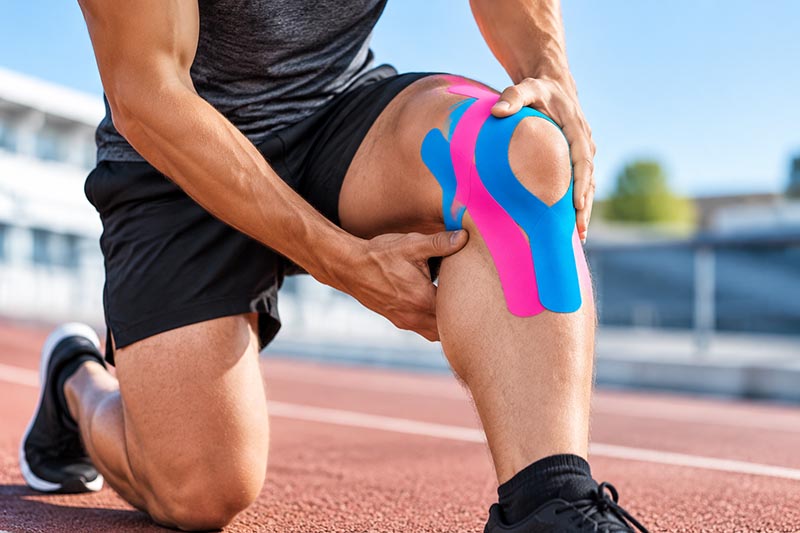
What Is Joint Support Tape?
Joint support tape refers to taping products applied around areas such as the knee, ankle, wrist, shoulder or elbow to provide external support during movement or physical activity. The term describes an application category rather than one single tape construction.
Joint Support Tape Product Options
Different applications call for different tape characteristics. Understanding the main product types helps buyers select suitable products for their target markets.
01. Kinesiology Tape for Flexible Joint Support
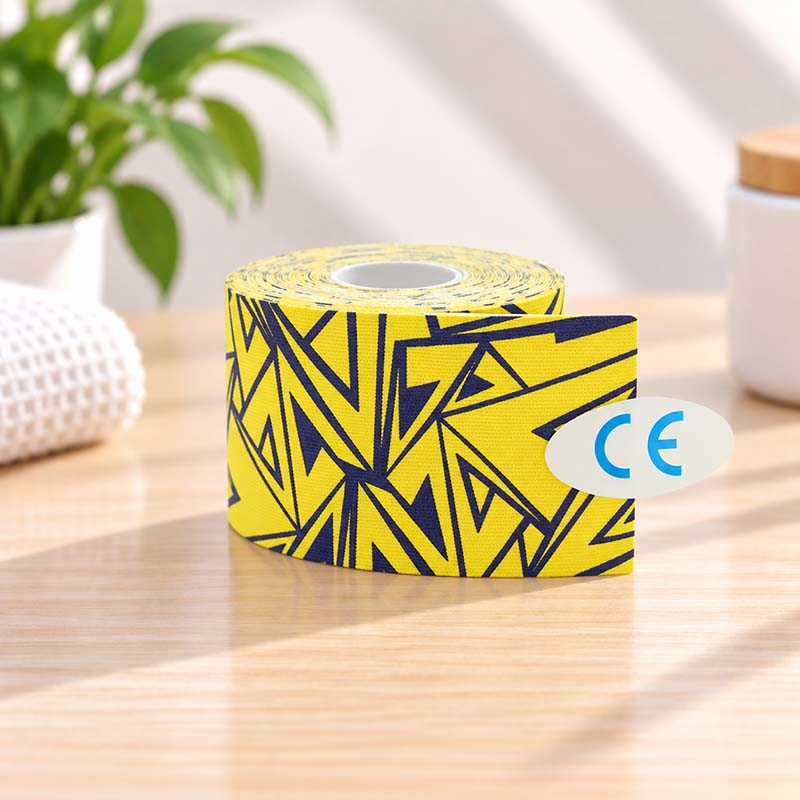
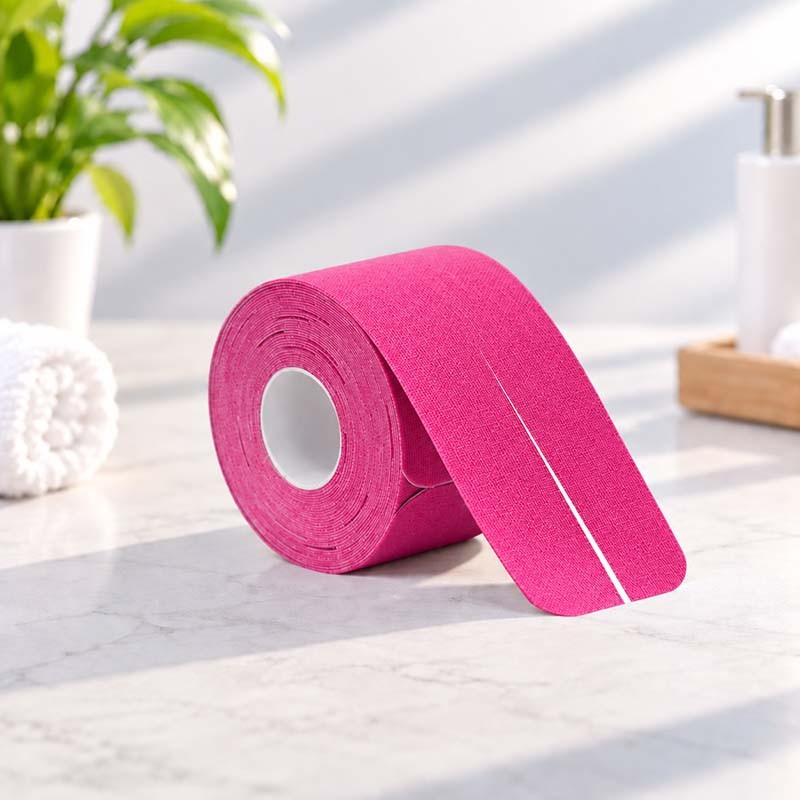
Kinesiology tape is an elastic adhesive tape commonly used in sports and physiotherapy settings. It stretches with the body and can be applied around selected joint areas while allowing a relatively broad range of movement.
Typical applications include taping around the knee, shoulder, ankle and wrist. Product selection may consider fabric composition, elasticity, adhesive properties, width, color and expected wear conditions.
Kinesiology tape is a suitable option when flexibility and movement compatibility are priorities. Its actual performance depends on the product construction, application technique, skin condition and activity involved.
02. Rigid Sports Tape for Firmer External Restraint
Rigid sports tape is a low-stretch option used in taping applications where limiting selected movements is part of the intended support strategy. It is often considered for sports taping around areas such as the ankle or wrist.
Compared with elastic kinesiology tape, rigid sports tape provides less stretch. This difference makes it more appropriate for certain restrictive taping techniques, but it also means application requires attention to positioning, circulation and comfort.
Rigid sports tape should be selected according to the professional's intended technique rather than treated as interchangeable with elastic tape.
03. Elastic Adhesive Bandage for Wrapping Applications
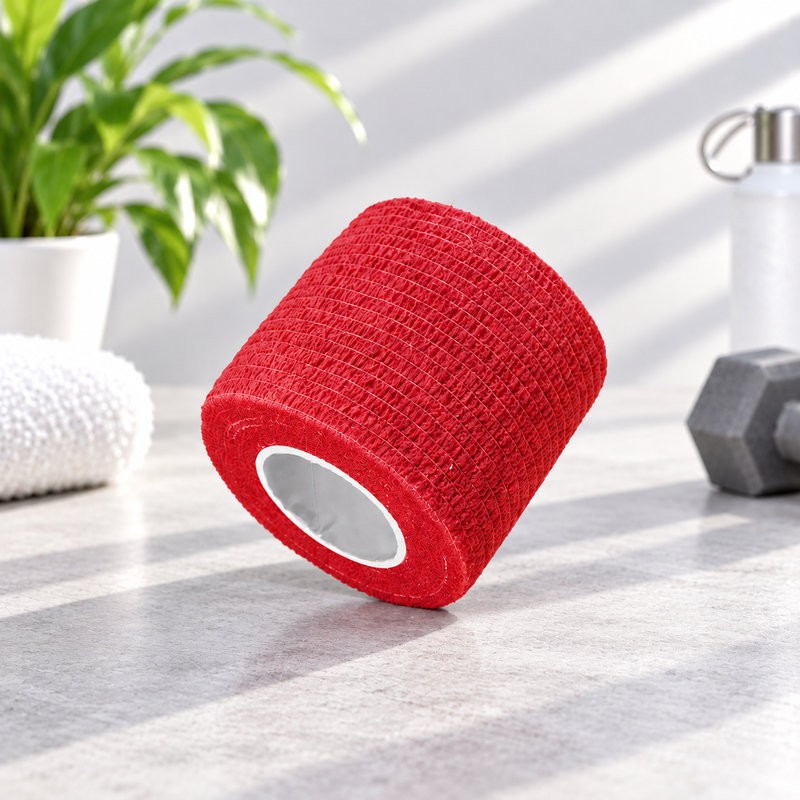
Elastic adhesive bandages provide a flexible wrapping option for selected sports and support applications. Their stretch characteristics and adhesive construction influence how they conform to body contours.
For buyers, important factors include elasticity, width, roll length, adhesive consistency, fabric construction and packaging. The specific product should be matched to the intended wrapping method and professional guidance.
04. Foam Underwrap as an Application Accessory
Foam underwrap may be used beneath selected sports tapes to provide a protective interface between the skin and the outer tape. It is an accessory rather than a direct substitute for joint support tape.
Its suitability depends on the taping system, skin sensitivity, application requirements and the professional's preferred method.
Joint Support Tape Applications by Body Area
Joint support requirements vary because each joint has a different structure, movement pattern and functional role. The following examples describe common application contexts, not medical treatment instructions.
01. Knee Support Taping
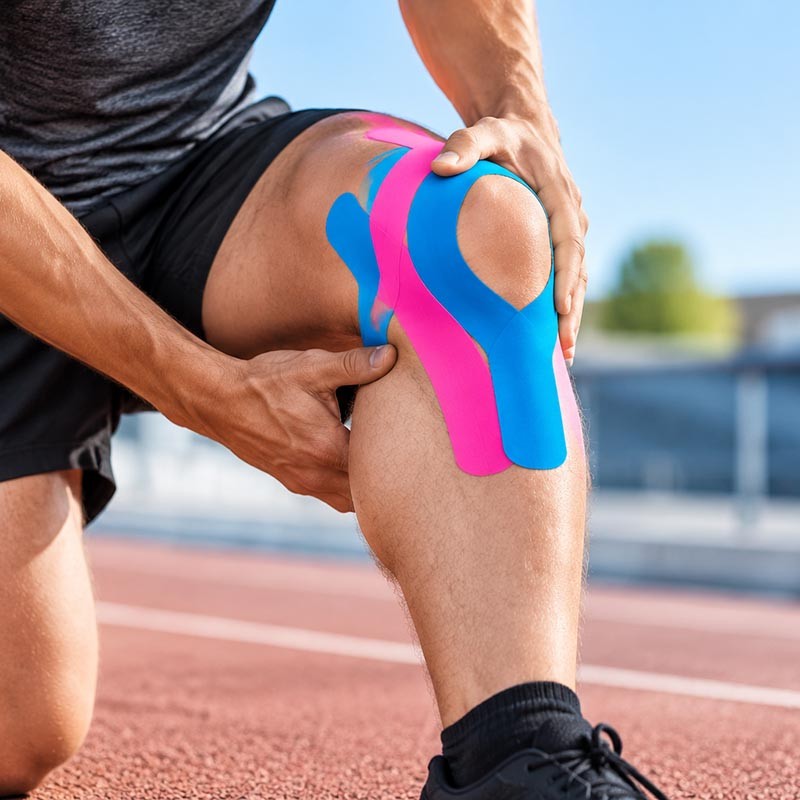
The knee is exposed to repeated bending, loading and directional changes during activities such as running, jumping and court sports. Depending on the intended application, professionals may consider elastic kinesiology tape or other sports taping products around the knee area. Product selection should account for movement, skin contact, tape placement and the activity involved. The tape must not be applied so tightly that it causes discomfort, numbness or changes in circulation.
02. Ankle Support Taping
Ankle taping is common in sports where athletes accelerate, land, pivot or change direction. Rigid sports tape may be considered when a professional intends to restrict selected movements, while elastic products may be used for different movement-oriented taping approaches. The appropriate construction depends on the taping method and the athlete's circumstances. Persistent pain, swelling or difficulty bearing weight requires appropriate medical assessment rather than relying on tape alone.
03. Wrist Support Taping
Wrist taping may be used in selected sports, training or occupational activities involving repetitive hand and wrist movement. Elastic or rigid tape may be considered depending on the desired movement allowance and application technique. Tape width, conformability and ease of application can be particularly relevant around the wrist, where the application area is relatively small and movement is frequent.
04. Shoulder Support Taping
The shoulder allows movement in several directions and requires careful consideration of the intended taping approach. Elastic kinesiology tape is often considered for flexible applications around the shoulder region. Product suitability depends on the placement technique, skin compatibility and movement demands. Tape selection should be guided by the intended application rather than by a general claim that one product supports every shoulder condition.
05. Elbow Support Taping
The elbow combines bending and straightening with movements of the forearm. Taping products may be selected for certain sports or movement-support applications based on the area being taped and the desired degree of flexibility. Elastic tape can accommodate movement in some applications, while other methods may require different constructions. Correct application and comfort remain essential.
How to Choose the Right Joint Support Tape
A useful selection process starts with the intended application, then considers the product's physical properties and commercial requirements.
1. Define the required movement allowance. Determine whether the application calls for flexible movement-oriented taping, firmer external restraint or an elastic wrapping method. This helps narrow the choice between kinesiology tape, rigid sports tape and elastic adhesive bandages.
2. Consider the joint and application area. Joint size, body contours and movement patterns affect the required tape width, conformability and application method. A product suitable for one body area may not be ideal for another.
3. Evaluate the material construction. Fabric type and elasticity affect stretch, recovery, handling and conformity. Buyers should assess whether cotton, rayon, nylon or another suitable construction aligns with their product specifications.
4. Review adhesive performance. Adhesion should be evaluated in relation to the intended wear conditions, application surface and removal requirements. Sweat, friction, skin preparation and movement can all influence real-world performance.
5. Match the product to its users. Physiotherapy clinics, sports teams, retailers and private label brands may have different requirements for packaging, color selection, roll dimensions and product presentation.
6. Validate the specification before bulk production. Samples and documented product specifications help buyers evaluate handling, adhesion, stretch and packaging before approving a larger order. No single joint support tape is ideal for every application. A clear product brief and appropriate testing are more reliable than choosing by appearance alone.
Materials and Adhesive Performance
Material selection is a key consideration in the development of joint support tape. It influences how the product feels, stretches, conforms to body contours and performs during intended use.
Fabric and Stretch Characteristics
Cotton is commonly considered when a traditional fabric feel is desired. Rayon may be selected for particular textile characteristics, while nylon can be considered where its strength and handling properties align with the product requirements. Actual performance depends on the complete fabric construction, yarn properties, knitting or weaving method and finishing process. For elastic tape, stretch and recovery should be evaluated together. A tape that stretches easily but does not recover as intended may behave differently from one designed for a specific balance of elasticity and resistance.
Adhesive Selection
Adhesive formulation and coating consistency influence how tape bonds to the intended surface. For skin-contact sports tape, evaluation may include adhesion, flexibility, edge lifting, wear behavior and removal experience. Adhesive performance should not be reduced to a single claim such as “stronger is always better.” The target application may require a balance between reliable adhesion and acceptable removal. Skin compatibility also depends on the complete product and individual user sensitivity.
Breathability and Skin Contact
Air permeability, moisture management, product thickness and the duration of wear can affect user comfort. No tape can guarantee that every user will avoid irritation, so products should be evaluated under their intended conditions and accompanied by appropriate usage guidance. For a deeper technical overview, buyers can explore Onlywell's Materials & Adhesives content covering sports tape fabrics, elasticity, adhesive systems and factors affecting adhesion.
Joint Support Tape Quality and Manufacturing Considerations
For professional buyers, product consistency is as important as the nominal specification. Differences in fabric, adhesive coating, slitting or winding may affect the way a tape handles from roll to roll.
A practical quality program may include the following checks, according to the product specification:
-
Incoming material inspection: Review the identity and consistency of fabric, adhesive-related materials, release liners and packaging components.
-
Dimensional checks: Verify roll width, length, thickness where specified, and other agreed dimensions.
-
Adhesion evaluation: Use defined methods to assess the relevant adhesion characteristics for the product.
-
Stretch and recovery assessment: Confirm that elastic products meet the agreed performance requirements.
-
Visual inspection: Check for visible coating defects, contamination, uneven edges or winding problems.
-
Packaging and traceability review: Verify labels, batch identification, carton details and approved artwork.
Test methods and acceptance criteria should be established for each product rather than assumed to be identical across all tape types. Where applicable, customers may request the relevant technical documents, quality records and compliance information for review. For skin-contact products, claims about biocompatibility, skin safety or regulatory status should be supported by documentation appropriate to the exact product and target market. Certifications or registrations should not be assumed to cover every product in a manufacturer's range.
OEM and Private Label Joint Support Tape
Brands and distributors may need joint support tape products that align with their own market positioning, packaging system and channel requirements. OEM and private label development can help organize these requirements into a defined product specification.
Depending on the product type and manufacturing feasibility, customization may include:
-
Tape material and fabric construction
-
Product width and roll length
-
Color options for applicable elastic tapes
-
Adhesive and release-liner specifications
-
Individual packaging and retail presentation
-
Private label artwork and carton labeling
-
Sample review and pre-production approval
A clear inquiry should identify the intended application, target users, preferred tape type, dimensions, estimated order quantity and destination market. If the product will make medical or performance-related claims, buyers should also identify the relevant regulatory and documentation requirements early in development.
The typical workflow includes requirement confirmation, specification review, sample evaluation, packaging approval, production planning and quality checks against the agreed requirements. Lead time, minimum order quantity and customization availability should be confirmed for the specific project. Onlywell supports sports tape and cohesive bandage product development for business customers seeking a consistent supply program. Final specifications and available options should be confirmed with the Onlywell team before an order is placed.
Who Can Benefit from a Joint Support Tape Supply Program?
Joint support tape products may be relevant to several professional buyer groups:
-
Physiotherapy and sports medicine suppliers seeking different taping options for professional customers.
-
Sports equipment distributors building a portfolio of products for athletic training and sports care.
-
Private label brands developing branded elastic tape or rigid sports tape lines.
-
Retail and e-commerce businesses requiring defined product dimensions, packaging and product information.
-
Healthcare and sports product wholesalers looking for a structured range of support and taping products.
The product mix should reflect the needs of the target market. A specialist sports distributor may prioritize rigid sports tape and elastic kinesiology tape, while another customer may require a broader range that includes elastic adhesive bandages and foam underwrap.
Why Work with Onlywell?
Onlywell Sports Medicine focuses on sports tape and cohesive bandage manufacturing for business customers. Our product portfolio supports different application needs, from elastic kinesiology tape to rigid sports tape and related wrapping products.
For OEM/ODM projects, the objective is to translate the buyer's market requirements into a practical product specification. Material selection, dimensions, packaging, quality expectations and intended use should be discussed together so that samples can be assessed against clear criteria.
When evaluating a supplier, buyers should review the relevant product specifications, sample quality, quality-management documentation, production capability and communication process. These details help establish whether a product and supplier are suitable for a long-term supply relationship. Contact Onlywell to discuss the intended application and identify suitable product options for your joint support tape range.
Frequently Asked Questions About Joint Support Tape
What is joint support tape used for?
Joint support tape is used in selected sports, physiotherapy and movement-related applications to provide external taping support around areas such as the knee, ankle, wrist, shoulder and elbow. The appropriate product depends on the intended application and professional guidance.
What is the difference between kinesiology tape and rigid sports tape?
Kinesiology tape is elastic and designed to stretch with movement. Rigid sports tape has limited stretch and is used in applications where firmer external restraint is intended. They serve different purposes and are not interchangeable in every taping technique.
Can the same tape be used for every joint?
Not necessarily. Joint anatomy, movement requirements, application technique and the desired level of restriction vary. Tape type, width and application should be selected for the specific use.
What should distributors consider when sourcing joint support tape?
Key considerations include material construction, dimensions, adhesive performance, product consistency, packaging, documentation, target-market requirements and sample evaluation. OEM buyers should confirm the specification before bulk production.
Can joint support tape be customized for a private label brand?
Customization may be available for suitable product types and can include dimensions, colors, packaging and artwork. Availability, minimum order quantity and lead time depend on the specific requirements and should be confirmed with the manufacturer.
Does joint support tape treat or prevent joint injuries?
Tape is not a substitute for diagnosis or treatment, and no tape can guarantee injury prevention. Its role depends on the application method and context. Users with pain, swelling, instability or persistent symptoms should seek advice from an appropriate healthcare professional.
Explore Joint Support Tape Options with Onlywell
Looking for joint support tape for physiotherapy, sports distribution or a private label product line? Share your preferred tape type, material, dimensions, packaging requirements and target market with our team.
Onlywell can help you review suitable product options and discuss the specifications needed for your project.
Get Free Samples & Request OEM Quote
Contact Onlywell to discuss joint support tape, compare product constructions and start your OEM/ODM inquiry.